What is AI in the Smart Grid?
In the context of our homes and power systems, "AI-enabled technology" often refers to the sophisticated data analysis performed on information collected by smart meters. The push for this technology comes from the need to make our power grids more efficient, especially as we add more renewable energy sources like wind and solar. AI helps manage the grid, balance supply and demand, and helps consumers track their energy use.
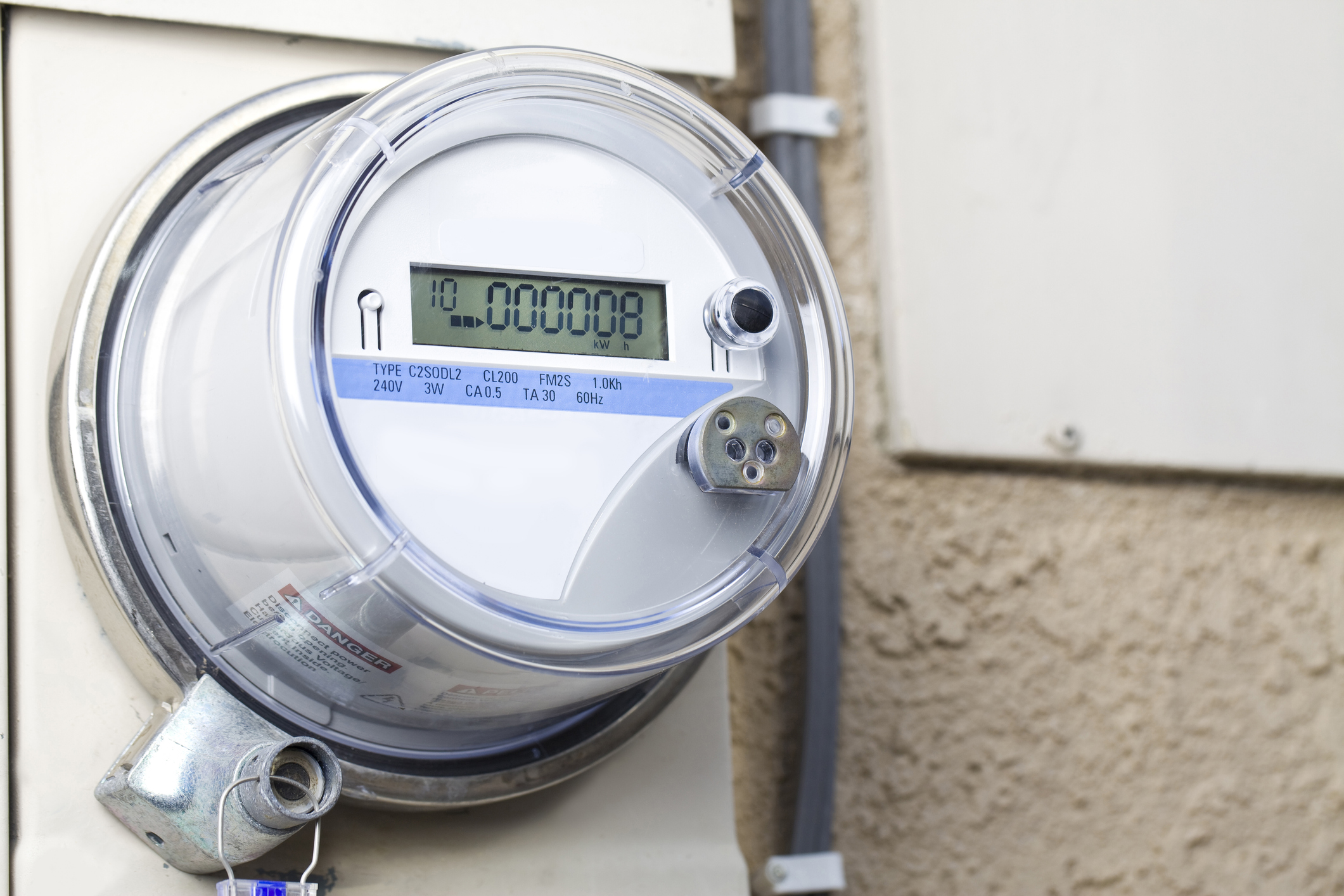
This technology is primarily developed by utility companies, grid operators, and technology firms (often in collaboration with academic researchers) to improve grid stability and offer new services to customers.
How it Works: Non-intrusive Load Monitoring (NILM)
The key AI application is called Non-intrusive Load Monitoring (NILM). A smart meter records the total electricity consumption for an entire house. NILM is a set of machine learning algorithms that takes this single point of data and mathematically separates it by its changes over time to "see" the energy signatures of individual appliances.
"Non-Intrusive Load Monitoring is an area in computational sustainability that aims at determining which appliances are operating from the aggregated load reported by a smart meter" (Salem et al., 2020).
Here is a simple breakdown of the process:
1. Total Home Energy
All appliances running at once.
2. Smart Meter + AI Model
AI (NILM) analyzes the changes in total consumption over time.
Refrigerator
Television
Air Conditioner
Purported & Actual Benefits

The benefits of using AI in the grid are promoted for both consumers and utility providers. For consumers, it offers detailed feedback that can help them save money. For utility companies, it's a powerful tool for managing the entire grid.
-
For Consumers
Detailed feedback on appliance usage can help consumers:
- Change their habits
- Identify failing or faulty appliances
- Reduce their electricity bill
This is part of demand-side management, which is defined as "the actions that influence the way consumers use electricity to achieve savings and higher efficiency in energy use" (Salem et al., 2020).
-
For Utility Companies and the Grid
Smart metering provides utility companies with:
- "Improved forecasting of renewable energy generation"
- "Enhanced grid resilience"
- "Better supply-demand balancing"
(Henao et al., 2025).
This can be instrumental for preventing blackouts and integrating unstable renewable sources.
Major Ethical Debates
The same capabilities that make this AI useful also create significant ethical risks. The academic and regulatory discourse highlights several key "matters of concern" (Henao et al., 2025). Here are two of the most significant.
1. Privacy and Surveillance

This is the most widely discussed ethical issue. Because NILM can identify individual appliances, it can predict deeply personal information about a household's occupants, routines, and lifestyle.
"through smart meter obtained energy data, home energy providers can use AI to reveal private consumer information such as households' electrical appliances, their time and frequency of usage, including number and model of appliance" (Carmody et al., 2021).
This data can reveal "when occupants are home, their sleep patterns, and even the type of media they consume" (Carmody et al., 2021). This turns a simple utility device into a potential surveillance tool, raising massive questions about consent and data protection.
2. Accountability & Transparency

Many machine learning models are "black boxes," meaning even their creators can't fully explain how they reach a specific decision. This is a massive problem when AI is used in "critical infrastructures" like the power grid (Volkova & Anapyanova, 2024).
"adopting AI in critical infrastructures presents challenges due to unclear regulations and lacking risk quantification techniques" (Volkova & Anapyanova, 2024).
If an AI-driven system makes a mistake, like incorrectly forecasting demand, leading to a blackout; or unfairly billing a customer; who is accountable? The lack of transparency in these models makes it difficult to assign responsibility, creating one of the "critical issues around transparency... accountability, and fairness in power distribution" (Henao et al., 2025).
Works Cited
This project incorporates analysis and direct citations from the following sources.
-
Carmody, Jillian, et al. “AI and Privacy Concerns: A Smart Meter Case Study.” Journal of Information, Communication and Ethics in Society, vol. 19, no. 4, 29 July 2021, pp. 492–505, www.emerald.com/insight/content/doi/10.1108/JICES-04-2021-0042/full/html, https://doi.org/10.1108/jices-04-2021-0042.
-
Crawford, Kate. Atlas of AI: Power, Politics, and the Planetary Costs of Artificial Intelligence. Yale University Press, 2021, pp. 23–51.
-
Henao, Felipe, et al. “AI in Power Systems: A Systematic Review of Key Matters of Concern.” Energy Informatics, vol. 8, no. 1, 2 June 2025, https://doi.org/10.1186/s42162-025-00529-1.
-
Salem, Hajer, et al. “A Review on Non-Intrusive Load Monitoring Approaches Based on Machine Learning.” Springer EBooks, 1 Jan. 2020, pp. 109–131, https://doi.org/10.1007/978-3-030-42726-9_5.
-
Volkova, Anna, et al. “Being Accountable Is Smart: Navigating the Technical and Regulatory Landscape of AI-Based Services for Power Grid.” Proceedings of the 2024 International Conference on Information Technology for Social Good, ACM, 2024, pp. 118–26. Crossref, https://doi.org/10.1145/3677525.3678651.
Want to Learn More?
Here are five additional resources if you would like to learn more about this topic, beyond the literature already cited.
-
AI for Energy: Opportunities for a Modern Grid and Clean Energy Economy from the U.S. Department of Energy
US DoE's report on how AI can be used to improve the grid. Includes some risks of using AI as well.
-
AI for the Grid: Opportunities, Risks, and Safeguards by the Center for Strategic & International Studies (CSIS)
A report focusing on the possiblities, limitations, and possible fixes to the limitations of AI in the grid.
-
AI and the Future of the U.S. Electric Grid by RAND Corporation
An article looking at how the explosion of AI technology will affect the U.S. power grid.
-
Non-intrusive Load Monitoring Using Machine Learning Algorithms from Duke University Energy Initiative
A brief YouTube video providing a deeper dive into how NILM works.
-
A review of current methods and challenges of advanced deep learning-based NILM in residential context from the journal Energy and Buildings
This paper addresses the state of NILM technology, current limitations and future approaches.
Key Social Factors
AI technology is not developed in a vacuum. It is shaped by social needs, economic forces, and existing power structures. Here are two key factors shaping AI in the smart grid.
1. The Material Cost of "Green" AI
A major social driver for grid AI is the urgent need to decarbonize and fight climate change. However, as Kate Crawford (2021) argues in Atlas of AI, this "green" technology has a massive physical footprint.
This social context is a deep contradiction: the push for computational efficiency to save the environment is, at its base, "an extractive industry" that consumes vast amounts of energy, water, and minerals from the Earth.
2. Institutional Power & Data Control
Smart meters fundamentally change the relationship between consumers and utility companies (institutions). Through smart metering and other advancements, these institutions now have access to a continuous stream of highly personal data.
This power dynamic shapes the technology's application, often prioritizing grid-level optimization or corporate data-sharing partnerships over the individual's right to control their own information.